Crewkerne
Crewkerne — what is worth seeing in town
Crewkerne is a working market town of around seven thousand people in south Somerset, roughly nine miles from Yeovil and seven from Chard. It is not a chocolate box, and most people passing through on the A30 do not stop. An hour on foot is enough to see why it is worth stopping.
St Bartholomew’s
The parish church stands on the site of an Anglo-Saxon minster, though almost everything you see was built in the fifteenth and sixteenth centuries. It is Grade I listed, in the Perpendicular style, and built of the golden Ham Hill stone quarried a few miles north. The west front is the thing to look at: it is far grander than a town this size would normally get, which tells you how much money was here when it went up.
The market square
The town hall in the square is a 1900 rebuild of a market hall from around 1730, and some of the original arches survive on its west side. Crewkerne’s medieval market was reckoned the second most valuable in Somerset. There is still a general market on a Wednesday and a farmers’ market on the third Saturday of the month.
Around the square and along the streets running off it, a lot of substantial late Georgian frontages have survived, largely because Crewkerne did not boom in the late nineteenth century and nobody knocked them down. The George on the square is an 1832 rebuild of a coaching inn that started life in 1541, back when this was a stop on the road between London, Exeter and the Dorset coast. Look out too for Candle Cottage, a priests’ house from the late 1400s, and the White Hart of 1499.
Sailcloth
The town’s money came from flax. Crewkerne wove sailcloth, and the local product, Coker Cloth, was rated highly enough to be supplied to the Royal Navy. It is said to have gone into some of the sails of HMS Victory, and later into King George V’s yacht Britannia and America’s Cup contenders. There was a clothing factory here from 1872 employing up to six hundred people. The Museum and Heritage Centre, in a late Georgian building in the centre, tells that story across four galleries, along with the rest of the district’s history.
The rest of it
Falkland Square has the library and a run of shops. There is a swimming pool at the Aqua Centre if you have children who need burning off, and a good scatter of cafés and independents for a town this size.
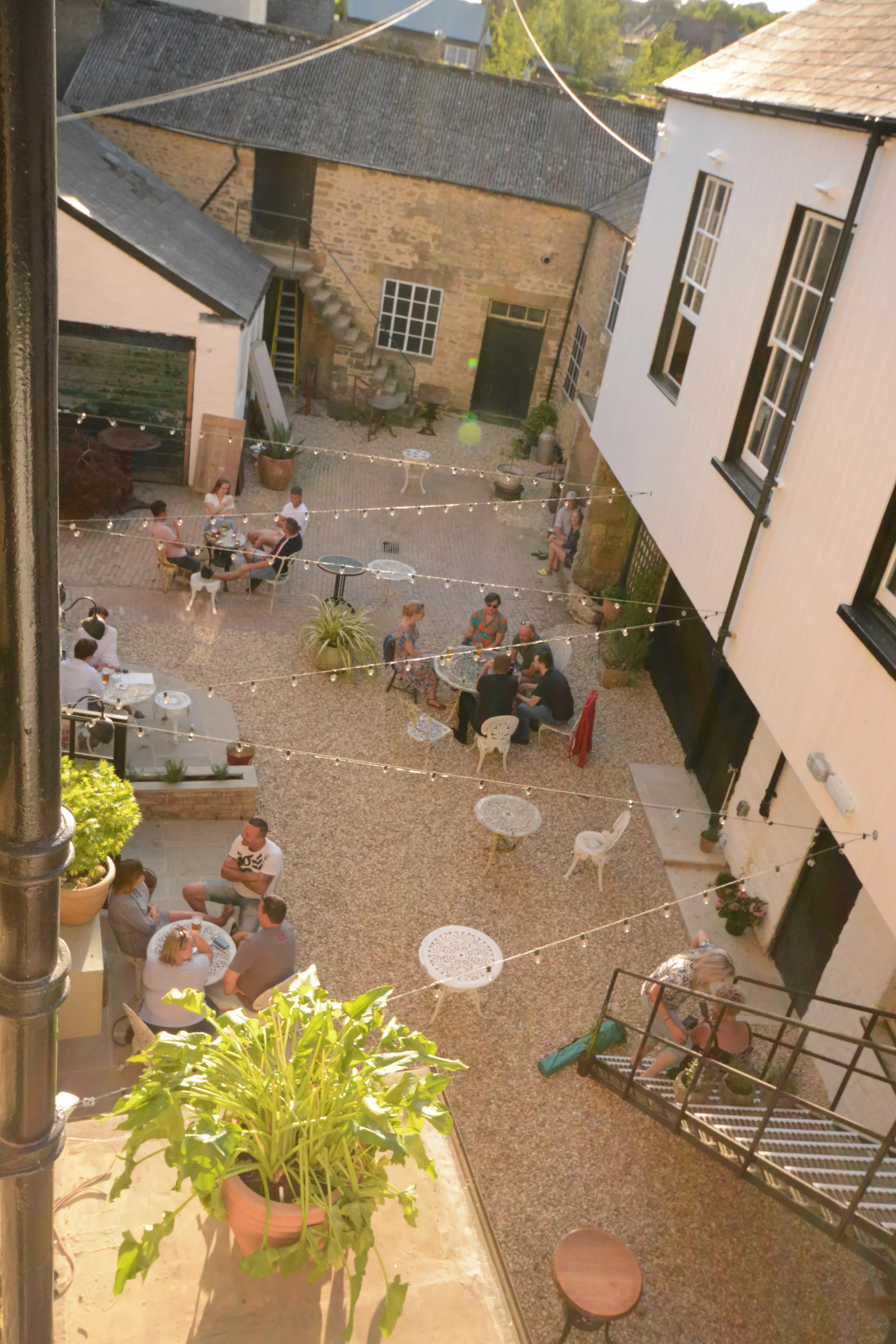
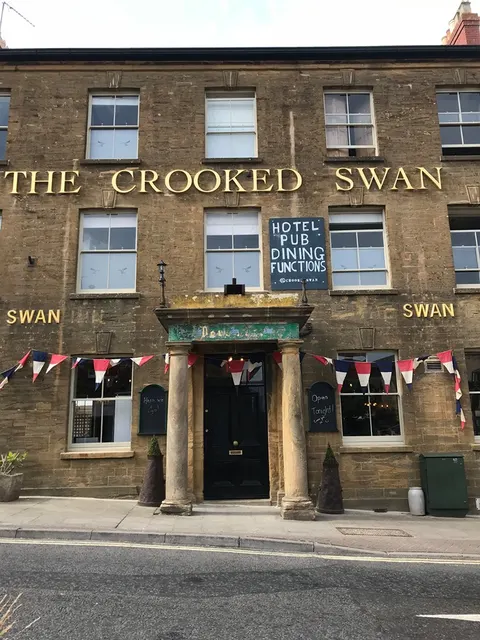
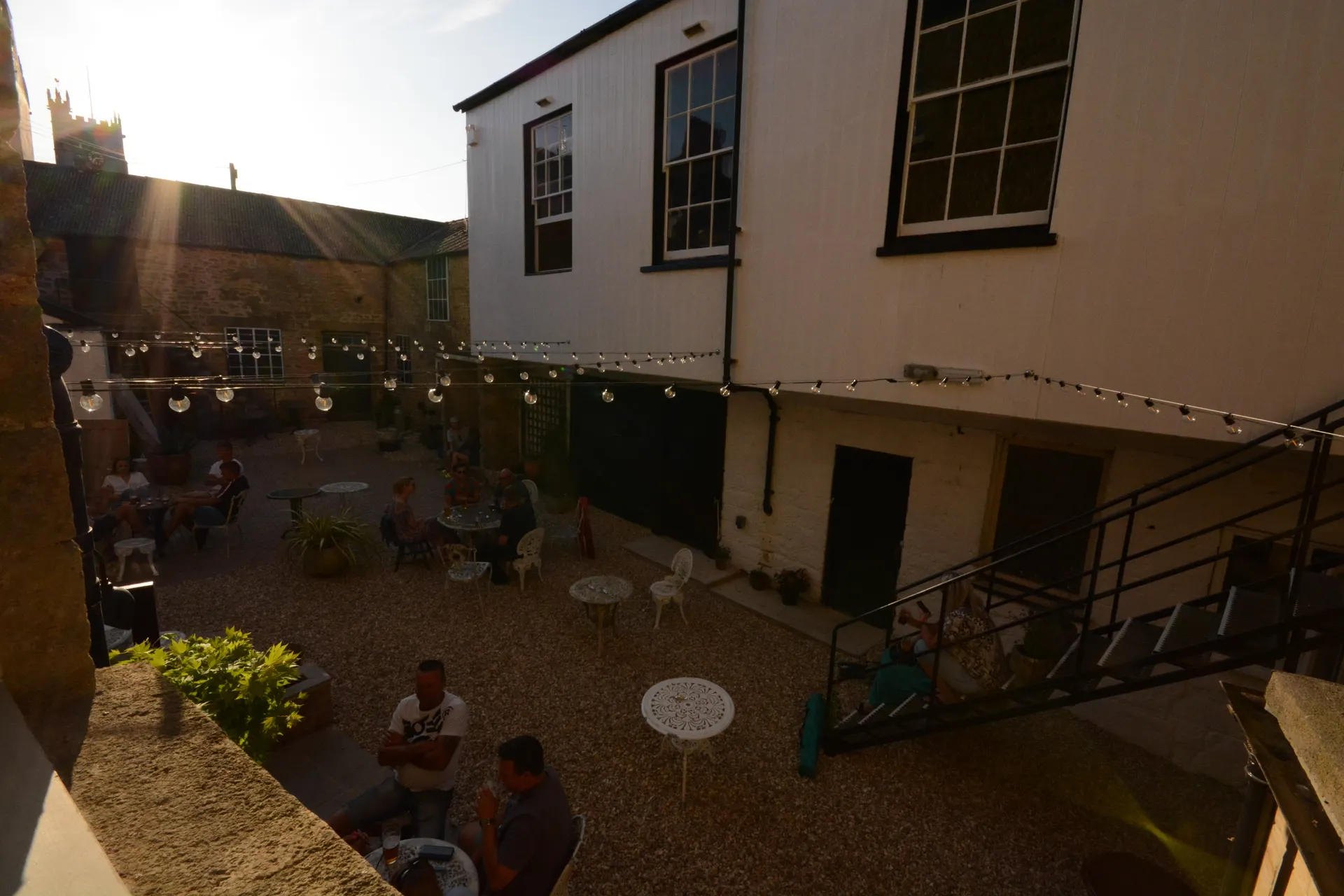
We are at number 4 Church Street, a minute from the square and on the street that runs up to St Bartholomew’s, which makes us an easy base for all of the above. Breakfast before you walk it, or a pint after.
The Crooked Swan
Make a stay of it
Stay the night, then take your time exploring this corner of Somerset.